If you haven't heard, Mr. Tom Clancy, the best-selling author of classic thrillers like Rainbow Six, Patriot Games, Red Storm Rising and countless other fantastic books as well as the name behind a smorgasbord of successful video game series published by Ubisoft, has passed away. This is not an obituary, for I do not have the words nor the right to speak of the man. Rather, this is an expression of gratitude, one that celebrates his legacy and the effect that this great writer has had on me personally.
In short, I would like to thank Tom Clancy for moulding a large part of my childhood through his seminal works featuring his classic hero, Jack Ryan, as well as numerous other books including but not limited to Red Storm Rising and Rainbow Six. He inspired me to do my own writing, which will never be as good as his and probably never make the light of day (trust me, it's better that way) but nonetheless, his words were an inspiration and his stories a well for a young boy's imagination. Furthermore, his detailed examination into the worlds of espionage and military activity helped to develop my passion for both military history and the colourful world of spies and lies.
No discussion of Tom Clancy would be complete, of course, without mentioning his work in the gaming industry. While the Tom Clancy brand might have little to do with the man in recent years, we can thank Tom Clancy for bringing us the characters and series we've grown to love. His initial contribution was of course through the founding of Red Storm Entertainment, the original creators of Rainbow Six and currently still active as a subsidiary of Ubisoft. Through Red Storm, the Tom Clancy universe in video games was born. Although his contribution to Ghost Recon, Splinter Cell, H.A.W.X, EndWar and now The Division is unclear, the fact remains that none of these games would've happened without the man himself and his initial jump through his ownership of Red Storm.
Ultimately, all I have to say to Mr. Clancy is thank you for everything and may you rest in peace.
Showing posts with label Books. Show all posts
Showing posts with label Books. Show all posts
Thursday, 3 October 2013

Tuesday, 6 August 2013
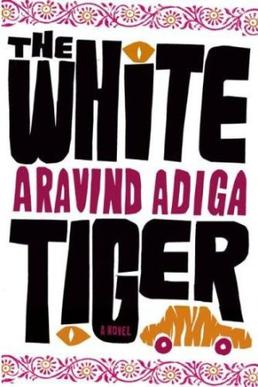
Book Review: 'The White Tiger' by Aravind Adiga
'The White Tiger' is Adiga's debut novel set in a modern but polarised India, written in first person as Balram Halwai, who is aptly described at the back of the book as 'servant, philosopher, entrepreneur, murderer'. The book has reached critical acclaim since its debut in 2008 and won the very significant Man Booker prize in the same year. It is the fourth debut novel ever to win the prize.
 |
What first intrigued me about this book was not its contents, but its achievements. Winning the international (well, Commonwealth) Man Booker prize is no easy task and I admit, that is how it first caught my eye off the bookshelves. The author is the second youngest person at 33 to be awarded the prize and what more, for his debut novel. With that alone in mind I turned its pages eagerly, trying to isolate a single brilliant characteristic that must have brought it to global attention (as I do with most prize winning novels). I was both thrilled and disappointed by the last chapter.
'The White Tiger' has a clear, definite story to tell. This gives it an edge in its structure; the author knows exactly when and where to reveal bits of information that takes you up and down a roller-coaster ride of narrative. From Balram's precious and impoverished childhood to his days as a lower servant and his ascension to a higher servant, every phase of his life is built specifically to outline different messages and crescendoes to the climax of his journey in Delhi. For the most part, there is only character development for one person, the most important person, Balram himself, who from the first page is noticeably different from the majority of the book. We see him narrate with detail his own metamorphosis through the social and political changes in India, with great insight into the 'darkness' - the poor, marginalised lower caste devoid of rights. Yet, he breathes so much life into these people that you do not feel sorry for them. They live in their own world, on the same planet but in different realities. The story is all about the transcension from one world to the next and does so with satire, contrast and wit. Having been to India myself and to some of the locations in the book, I imagined these scenes with clarity and understood the truth behind its settings. But I could have never emphatised with it on my own and that is exactly what the novel puts you through.
The novel's quality lies in its use of realism to convey its message. It is real not in a microscopic sense but in a big picture this is how the world works for this person and that person. I imagine the piece would lose some of its value if it were read by anyone living in a similar situation in India, particularly the lower castes (if they could read) as its 'shock value' would be rendered redundant, though its message is strong. I will not say that all lives in India are different or the same, but the character documents the one less travelled and compares it almost excessively with its polar opposite, making as though there are only two sides to a war, trying to create diversity through differentiation. The book is on the verge of complexity, but it never strays away from the simple -simple truths, simple facts, simple people. This is probably what prevents it from a sense of timelessness, it is notable but it needs more weight.
One of the things that irritated me at first was its language and its form (Balram is writing letters to the Chinese Prime Minister). I understand that every story needs a platform to launch but this was somewhat unreal and detrimental to when he delves into the realness of his life. I had gotten past the fact that a seemingly uneducated man was writing a structured english letter to a foreign Prime Minister, where in canon, he must have only started really learning to write english in his late 20's. But Fiction is Fiction and if you don't notice, it will not bother you. The author is no Vladimir Nobokov but his writing style is consistent and easily decypherable. Simplicity becomes a metaphor in itself in context of the character and works well.
My main disappointments are in the lack of character development outside the narrator, the slightly condescending, simplistic tone and lack of creativity with the language. Its merits are in its well thought-out narrative structure, underlying political and social values and its honesty in presenting issues.
Overall, I can see why the novel has won the prize. It is well above droves of fiction but still missing a rounded quality that would help make it more memorable. I will not give it a number but it ranks above 'The Perks of being a Wallflower' but below 'Life of Pie'.
Subscribe to:
Posts (Atom)